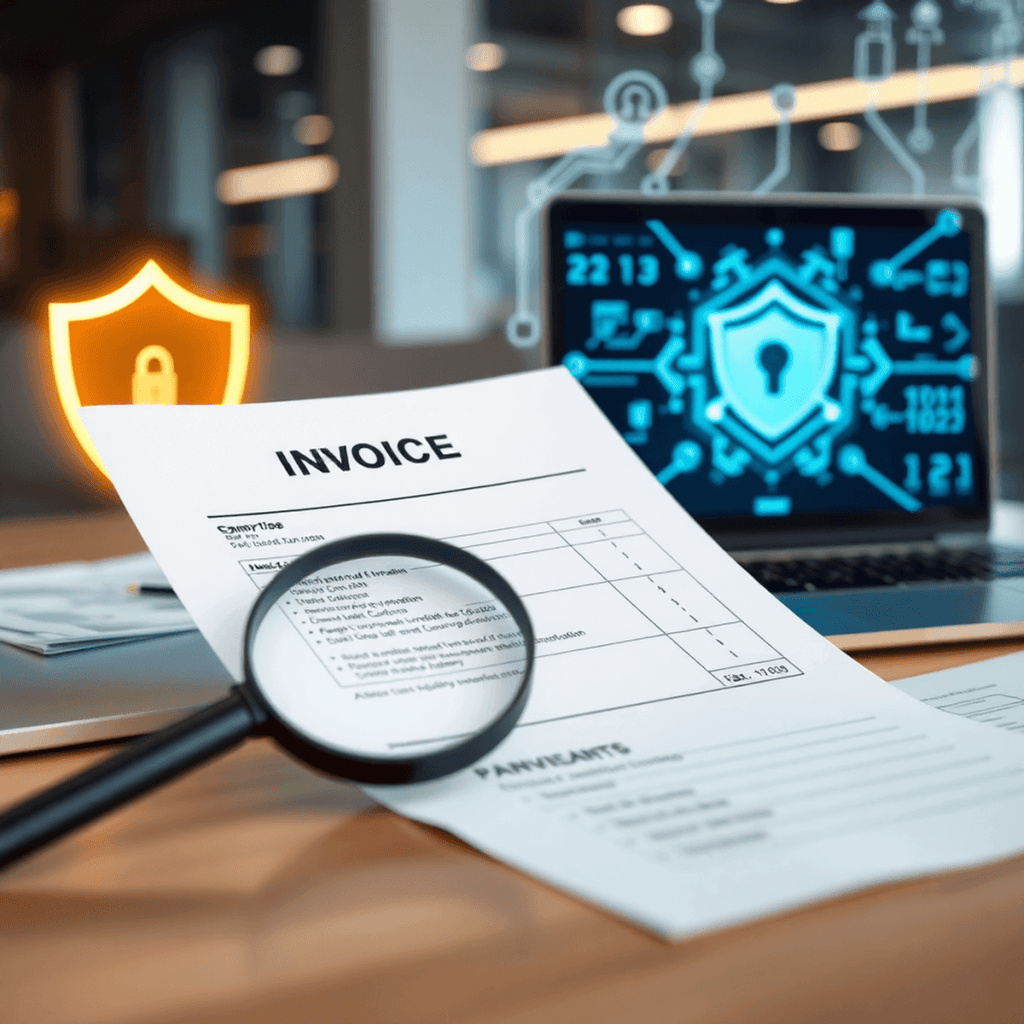
Fake invoice scams have become a critical threat to businesses in 2026. These scams involve criminals sending fraudulent invoices that appear legitimate, aiming to trick organizations into making unauthorized payments. As companies handle increasing volumes of transactions, the risk of falling victim to an email scam invoice or invoice phishing email grows significantly.
The sophistication of these scams has escalated with advances in AI and deepfake technologies. Fraudsters now create highly convincing fake invoices, complete with authentic logos, accurate layouts, and even forged supporting documents. Deepfake audio and video clips add pressure by impersonating executives asking for urgent payment approval. This new level of deception makes traditional detection methods less effective.
Vigilance is essential before releasing any payment. Knowing how to spot a fake invoice involves understanding the evolving tactics scammers use. Implementing 7 checks before you pay can protect your business from costly financial losses caused by invoice scams. Staying alert safeguards your company’s resources and reputation in an increasingly complex threat landscape.
Understanding Fake Invoice Scams in 2026
Fake invoice scams have evolved significantly from the basic tactics of the past. Traditionally, scammers relied on poorly designed invoices or suspicious payment requests that could be spotted with a careful eye. Today, AI-generated fraudulent invoices have raised the bar, making detection far more challenging.
How These Scams Operate Now
1. AI-Generated Fraudulent Invoices
Artificial intelligence is capable of producing highly realistic invoices that feature authentic logos, accurate layouts, and professional formatting indistinguishable from legitimate documents. These AI tools can replicate vendor styles flawlessly, reducing red flags typically associated with fake invoices.
2. Invoice Phishing Emails Using Compromised Accounts
Instead of sending emails from random or suspicious addresses, criminals often hijack legitimate supplier email accounts. This makes the invoice phishing email appear trustworthy and consistent with previous communications. Attackers then alter payment details subtly to redirect funds to their own bank accounts.
3. Altered Payment Instructions
The scam usually involves a last-minute change in payment instructions—such as a new bank account number or different payment platform—that goes unnoticed by busy accounts payable teams. Verification is bypassed because the email looks like it came from a trusted source.
New Layers of Sophistication: Deepfake Technology
1. Deepfake Audio and Video Clips
Scammers have started to incorporate deepfake technology by creating audio or video clips mimicking company executives or vendors. These clips are used to pressure employees into approving payments quickly without proper checks, playing on authority and urgency.
Example: A finance manager receives a convincing video call supposedly from their CEO requesting immediate payment for an urgent invoice. The clip features familiar voice tone, facial expressions, and language style—all generated by AI.
Impact on Businesses
The combination of AI-generated documents and compromised communication channels means fake invoice scams now operate with heightened sophistication. You face risks not just from poor spelling or formatting errors but from entirely credible-looking requests backed by synthetic voices or visuals.
Understanding these tactics gives you an edge in identifying potential fraud before making payments, emphasizing why vigilance must extend beyond traditional verification methods alone.
Why Fake Invoice Scams Are Harder to Detect Now
Fake invoice scams have evolved dramatically, fueled by the capabilities of AI-enhanced scams. Traditional red flags like misspelled vendor names or suspicious bank details are no longer reliable indicators. The sophistication of these scams demands a deeper understanding of modern tactics.
AI Mimics Tone, Style, and Email Threads
- AI algorithms analyze previous communications to replicate the exact tone and writing style of legitimate vendors.
- Entire email threads can be fabricated, appearing as ongoing negotiations or confirmations of prices and services.
- The presence of these realistic conversations lowers suspicion and tricks recipients into trusting the legitimacy of the invoice.
Simulation of Physical Document Features
- Invoices now include digitally simulated physical attributes such as creases, shadows, folds, or even smudges.
- These subtle details mimic scanned paper documents, making it difficult for human reviewers and automated systems to identify inconsistencies.
- Such visual cues add a false layer of authenticity that traditional verification methods fail to detect.
Metadata Manipulation and Invisible Imperfections
- Cybercriminals manipulate document metadata—timestamps, author information, and editing history—to match those of genuine invoices.
- These changes defeat many automated tools designed to flag altered or suspicious files.
- Imperfections remain so subtle they evade detection without expert forensic analysis or specialized software.
The rise of AI-enhanced email scam invoices means you cannot rely solely on surface-level checks. Detecting these scams requires attention to nuanced details beyond what meets the eye or standard software scanning. Understanding these complexities prepares you for more effective verification strategies.
Seven Essential Checks Before Paying an Invoice
You face increasing challenges with fake invoice scam checks, especially when fraudsters use advanced AI to mimic legitimate vendors. Implementing strict verification policies is your frontline defense against payment redirection and bank account discrepancies.
Check 1: Verify Vendor Payment Instructions
- Watch for sudden changes in payment details
- Fake invoices often feature altered bank accounts or new payment methods that appear without prior notice. These changes are a classic red flag for fraud detection.
- Confirm directly with known contacts
- Always reach out using contact information you already have, not from the suspicious invoice or email. Phone calls or separate emails to verified vendor representatives help ensure authenticity.
- Avoid relying solely on email communication
- Criminals may compromise genuine supplier email accounts or create lookalike domains. Using secondary communication channels reduces risk significantly.
This first step tackles the most common tactic used in fake invoice scams—redirecting payments to fraudulent accounts. Verifying vendor payment instructions guards against sending money where it doesn’t belong, addressing one of the primary causes of financial loss in these schemes.
Check 2: Cross-Check Invoice Amounts Against Purchase Orders and Contracts
Verifying invoice amounts is a critical step in your fake invoice scam checks. Criminals often tweak figures slightly to avoid immediate detection, trying to slip through minor discrepancies that might go unnoticed during routine processing. You need to ensure the invoiced amounts align exactly with the agreed pricing and contract terms.
Key points to focus on:
- Invoice amount verification: Compare every line item on the invoice with the original purchase order (PO). This means checking quantities, unit prices, discounts, taxes, and totals carefully.
- Purchase order matching: Confirm that the invoice references an existing PO number. If it doesn’t, treat this as a red flag requiring further investigation.
- Contract compliance: Review any relevant contracts or agreements to verify payment terms, pricing structures, and approved vendors. Make sure the invoice complies fully with these conditions before authorizing payment.
- Identify subtle variances: Fraudsters may insert small percentage increases or alter payment milestones subtly. Even a fraction of a percent added to large sums can lead to significant unauthorized outflows.
- Cross-department collaboration: Involve procurement or contract management teams in reviewing invoices against contracts. Their familiarity with vendor agreements adds a layer of verification beyond finance teams alone.
Implementing strong verification policies around purchase order and contract matching reduces risk significantly. This process acts as a powerful fraud detection tip by catching inconsistencies early — before payments are processed.
Maintaining strict alignment between invoiced amounts and contractual obligations becomes even more crucial as scammers exploit AI-generated invoices that look authentic in layout but hide fraudulent details within figures. Your vigilance here strengthens defenses against payment redirection schemes and bank account discrepancies disguised in otherwise legitimate-looking documents.
This check builds on verifying vendor payment instructions by ensuring what you pay corresponds exactly to what was ordered and contracted — indispensable for stopping fake invoice scams before they cause damage.
Check 3: Inspect the Email Sender Address and Communication Style
A critical part of your fake invoice scam checks involves scrutinizing the email sender address and the communication style. Fraudsters often use sophisticated tactics like phishing and email spoofing to impersonate trusted vendors. Detecting subtle signs requires attention to detail and familiarity with your usual vendor interactions.
Focus on sender domain authenticity
- Verify if the email domain matches exactly with your known vendor’s official domain. Watch for slight misspellings, extra characters, or unusual domain extensions that mimic legitimate addresses. For example, replacing “.com” with “.net” or adding extra letters such as “vendorname-support.com” can be red flags.
- Some scammers exploit compromised supplier accounts; these emails may come from genuine domains but still contain fraudulent payment instructions. This makes it essential to combine domain checks with other verification methods.
Assess communication style consistency
- Compare the tone, language, and formatting of the invoice email against previous correspondence from that vendor. AI-generated messages can imitate style but might miss nuances particular to your vendor’s typical communications—such as specific greetings, sign-offs, or jargon.
- Look for abrupt changes in writing style or professionalism level. A sudden shift from formal to overly casual language or vice versa could indicate a fake invoice scam attempt.
Beware of unusual email behaviors
- Phishing detection tools can flag suspicious elements like hidden links or attachments designed to redirect you to fraudulent payment portals. Always hover over links without clicking to inspect URLs carefully.
- Unexpected urgency or pressure within the email text is a common tactic used in payment redirection scams. If an invoice demands immediate payment without prior discussion, this should trigger further scrutiny.
Establishing robust verification policies that include mandatory inspection of sender details helps prevent costly mistakes. This step integrates naturally into your broader fraud detection tips aimed at strengthening defenses against evolving threats highlighted in How to Spot a Fake Invoice: 7 Checks Before You Pay.
Check 4: Examine Invoice Layouts and Document Features Carefully
Detecting fake invoices requires a close inspection of the document’s visual and technical details. AI-generated invoices have become incredibly sophisticated, making it essential to develop strong fake invoice scam checks as part of your verification policies.
Focus on these key areas:
1. Logos and Branding
Subtle differences in logos can be a red flag. Look for inconsistencies in color shades, resolution quality, or placement compared to previous authentic invoices from the same vendor. Criminals may use slight distortions or outdated versions of logos that fail to match current branding standards.
2. Fonts and Typography
Examine fonts closely. Hackers might use similar but not identical typefaces or incorrect font sizes. Pay attention to text alignment, spacing, and kerning—small deviations can indicate tampering or forgery.
3. Formatting and Layout
Genuine invoices follow a consistent structure—header placement, table styles, line spacing, and footer details are usually uniform. Variations such as missing elements, altered margins, or inconsistent numbering sequences can signal fraud.
4. Metadata Examination
If you have access to the electronic invoice file (PDF, Word), check its metadata properties. Metadata inconsistencies such as unusual creation dates, unexpected authorship, or altered modification histories often reveal attempts to disguise fraudulent documents.
5. Watermarks and Security Features
Some vendors use digital watermarks or embedded security features. Confirm these elements’ presence and integrity. AI tools may struggle to replicate dynamic features like holograms or QR codes that link back to verified systems.
6. Photocopy Effects Simulation
Be alert for AI-generated images mimicking physical characteristics like creases, shadows, or reflections seen in scanned documents. These effects might be artificially inserted but lack the natural randomness of true paper textures.
Applying these detailed fraud detection tips enhances your ability to identify suspicious invoices before processing payments. Integrating document authentication into your organizational verification policies forms a critical layer in defending against payment redirection driven by fake invoice scams.
Examining invoice layouts thoroughly complements earlier steps such as verifying vendor payment instructions and identifying bank account discrepancies. This layered approach strengthens your defense against increasingly convincing AI-generated fraud attempts.
Check 5: Confirm Payment Requests Through Secondary Channels
Verifying vendor payment instructions through multiple communication channels is crucial in protecting yourself from fake invoice scams. Scammers often take advantage of email vulnerabilities or hacked accounts to send fraudulent payment requests that look legitimate. If you only rely on the information in an email, you increase the risk of bank account discrepancies and payment redirection.
Key practices include:
- Initiate a direct phone call: Use previously verified phone numbers from your official vendor contact list, not those provided in the suspicious invoice email. This prevents falling victim to scammers who provide fake contact details.
- Utilize alternative communication methods: Text messages, video calls, or secure messaging platforms can offer additional layers of verification. These channels reduce reliance on potentially compromised email threads which AI can convincingly imitate.
- Confirm changes explicitly: When vendors inform you about updates to payment instructions, ask for confirmation through these secondary channels before processing any payments. Avoid approving changes based solely on email correspondence, especially if the change is unexpected or urgent.
- Document verification attempts: Keep records of all multi-channel verification efforts as part of your verification policies. This documentation supports internal audits and fraud investigations if necessary.
Implementing multi-channel verification aligns with best practices in fraud prevention protocols. It combines human judgment with technical controls, making it significantly harder for scammers to succeed. This approach complements other fake invoice scam checks by adding a strong layer of scrutiny specifically targeting vendor payment instructions and protecting against subtle manipulations intended to redirect funds illegally.
You can integrate this step into broader organizational workflows, ensuring every invoice triggers a routine cross-check via phone or secure messaging before approval. Such diligence reduces exposure to increasingly sophisticated fraud attempts, especially in environments where AI-generated invoices replicate familiar communication styles flawlessly.
Check 6: Use Automated Tools Alongside Human Review for Detection
Detecting fake invoice scams requires both advanced technology and human expertise. Relying only on automated fraud detection technology or manual review can leave openings that more sophisticated fraudsters can exploit. By combining both methods, you can strengthen your defense against payment redirection, bank account discrepancies, and falsified vendor payment instructions.
Key parts of an effective detection strategy include:
- Automated Fraud Detection Tools
- Use software designed to scan invoices and email communications for irregularities beyond human perception. These tools analyze metadata, verify domain authenticity, detect altered document features, and flag unusual transaction patterns based on historical data. Machine learning algorithms improve over time, identifying emerging scam tactics quickly.
- Human Oversight in Fraud Prevention
- Technology cannot catch every nuance. Skilled staff trained in fraud detection bring contextual understanding and intuition to spot subtle inconsistencies AI may miss. They evaluate tone anomalies in communication, verify suspicious invoice layouts, and question unexpected changes in payment details flagged by software.
- Continuous Feedback Loop
- Combining human insights with automated results creates a feedback system that refines verification policies. When employees identify false positives or uncover new scam techniques, this knowledge enhances the software’s algorithmic accuracy, making future fake invoice scam checks more reliable.
- Layered Verification Processes
- Implement multi-step approval workflows where flagged invoices undergo additional scrutiny before payment authorization. Software highlights potential risks while humans conduct secondary validations through vendor contact or contract matching.
Integrating automated tools with human review forms a strong barrier against complex scams targeting vendor payment instructions and bank accounts. This dual approach aligns with best practices outlined in How to Spot a Fake Invoice: 7 Checks Before You Pay by enabling rapid detection of suspicious activity without sacrificing the critical judgment only people can provide.
Check 7: Train Staff Regularly on Emerging Fraud Techniques
Staff training is a critical component of effective fake invoice scam checks and robust verification policies. Fraudsters constantly evolve their tactics, especially with the integration of AI and deepfake technology, making continuous education indispensable.
Key elements to include in employee training on scams:
- Awareness of Traditional and Modern Threats
- Employees need to recognize classic signs such as sudden changes in vendor payment instructions or bank account discrepancies. Simultaneously, they must understand new risks like AI-generated invoices that perfectly mimic legitimate documents or phishing attempts using compromised supplier emails.
- Understanding Payment Redirection Schemes
- Training should emphasize how criminals alter payment details to redirect funds without raising immediate suspicion. Real-world examples showing subtle differences in bank account numbers or email addresses help staff stay alert.
- Simulation Exercises
- Running regular phishing simulations or fake invoice identification drills sharpens employees’ ability to spot suspicious communications before payments are processed.
- Updates on Fraud Detection Tips
- Sharing the latest insights about emerging scams ensures your team is equipped with current knowledge. This includes recognizing deepfake audio/video clips used to pressure quick payment approvals.
- Encouraging a Verification Culture
- Promoting a workplace environment where questioning unusual invoice requests is standard practice strengthens internal controls and reduces errors caused by complacency.
Embedding these practices within your organization’s fraud prevention strategy complements technical controls and manual reviews, reinforcing How to Spot a Fake Invoice: 7 Checks Before You Pay as an ongoing verification process rather than a one-time effort.
Implementing Organizational Policies to Prevent Fake Invoice Payments
Establishing strong verification policies is essential for protecting your organization against fake invoice scams. These policies should require multiple levels of approval before any payment is made. Here are some important elements to include:
1. Multi-level approvals
Require at least two or three different managerial approvals for payments over a certain amount. This reduces the risk of one person making a mistake and ensures that multiple people review the invoice details.
2. Segregation of duties
Separate the responsibilities of those who approve invoices and those who process payments. This prevents fraud by limiting unauthorized access.
3. Routine audits
Schedule regular audits of payment records to catch any irregularities early on. Pay special attention to unusual amounts, vendor details, and approval trails.
Technology can greatly enhance these policies. By using e-invoicing systems, you can have better control over the invoice submission and approval process. Here are some benefits:
- Automated validation against purchase orders and contract terms,
- Real-time alerts for unusual activity such as changes in payment instructions,
- Centralized record keeping that makes audits easier.
Integrating blockchain technology into your processes can provide an extra layer of security with unchangeable transaction records. With blockchain’s decentralized ledger, once an invoice record is created, it cannot be changed without agreement from all parties involved. This transparency makes it nearly impossible to tamper with invoices or payment details and provides a reliable audit trail.
Key advantages of blockchain within invoice verification:
- Prevention of unauthorized changes to payment instructions,
- Enhanced trust between buyers and suppliers due to transparent transaction histories,
- Reduced reconciliation errors by maintaining a single source of truth accessible to both parties.
To maximize effectiveness, link e-invoicing platforms directly with blockchain infrastructure where feasible. This combination delivers secure transaction records while streamlining the entire accounts payable process.
Organizations should also have up-to-date supplier master data management systems. Regularly confirming vendor contact information and banking details helps avoid falling victim to compromised email accounts or fraudulent changes. Clear protocols for verifying any modifications—especially those related to payment instructions—must be embedded into organizational policies.
By implementing these controls alongside ongoing staff training, your organization can build a strong defense against increasingly sophisticated fake invoice scams targeting businesses in 2026 and beyond.
Real-World Examples of Successful Fake Invoice Detection
These real-world fraud cases show how organizations effectively used the 7 Checks Before You Pay strategy to avoid costly mistakes. These success stories in scam prevention demonstrate the practical value of being alert and verifying information properly.
Manufacturing Firm Avoids $150,000 Loss
A mid-sized manufacturing company received an invoice from a regular supplier with updated payment instructions directing funds to a new bank account. The accounts payable team noticed the change during Check 1: Verify Vendor Payment Instructions and immediately contacted the supplier via a verified phone number. The supplier confirmed no such update was made. The company flagged the invoice as fraudulent before any payment was processed.
Key takeaway: Always confirm payment instruction changes directly with trusted contacts.
Detection method: Cross-checking vendor details through secondary communication channels prevented a significant financial loss.
Tech Startup Catches Deepfake Audio Scam
A tech startup encountered an urgent payment request accompanied by an audio clip allegedly from their CEO, urging immediate invoice settlement. During Check 5: Confirm Payment Requests Through Secondary Channels, the finance team called the CEO directly and discovered the clip was a deepfake created to pressure approval. No payments were made.
Key takeaway: Never rely solely on audio or video requests for payments; verify independently.
Detection method: Secondary confirmation disrupted a sophisticated social engineering tactic involving AI-generated media.
Retail Chain Identifies Metadata Anomalies
The finance department of a retail chain used both automated tools and manual inspection (Check 6) to analyze invoice metadata when they detected subtle irregularities in file properties inconsistent with previous submissions from the same vendor. Further investigation revealed that these invoices originated from compromised email accounts impersonating trusted suppliers.
Key takeaway: Combining software analysis with human expertise catches hidden signs of fraud.
Detection method: Metadata scrutiny exposed altered documents that passed casual visual inspection.
Nonprofit Organization Spots Invoice Amount Discrepancies
An NGO performed a detailed reconciliation of invoices against contracts (Check 2) and found discrepancies in pricing that did not match agreed terms. The supplier’s usual discounts were missing, and some line items appeared inflated. After reaching out to the supplier, they confirmed that the invoice was fraudulent, sent from a spoofed email address.
Key takeaway: Always cross-reference amounts with contracts to detect unauthorized changes.
Detection method: Careful contract comparison helped identify suspicious billing before funds were released.
Construction Company Detects Layout Irregularities
A construction firm’s accounts payable team spotted unusual fonts and slightly altered logos on an invoice during Check 4: Examine Invoice Layouts and Document Features Carefully. Even though the sender’s email appeared legitimate, this subtle inconsistency triggered further review revealing it as a counterfeit document.
Key takeaway: Small visual inconsistencies can be red flags for fake invoices.
Detection method: Attention to design details prevented processing of fraudulent billing.
These examples highlight how applying each of the 7 Checks Before You Pay enhances your ability to identify fake invoices effectively. Each case underscores different tactics scammers use and how organizations adapted their verification process accordingly, strengthening defenses against evolving threats.
Conclusion
The landscape of fake invoice scams in 2026 demands a strategic blend of technology and human vigilance. Automated tools, AI detection software, and blockchain solutions offer powerful defenses, yet these must be paired with critical human judgment. Scammers continue to innovate with deepfake audio and AI-generated documents, making it essential that you do not rely solely on technology.
Key points for effective fake invoice scam prevention include:
- Implementing multi-level approval processes within your organization to catch suspicious invoices early.
- Conducting the 7 Checks Before You Pay every invoice, from verifying vendor payment instructions to scrutinizing email communication styles.
- Maintaining continuous staff training programs focused on both traditional fraud indicators and evolving AI-driven tactics.
- Encouraging open communication channels where employees feel empowered to question any irregularities.
A proactive policy framework combined with regular education creates a resilient defense against sophisticated scams. The best practices overview emphasizes not only technology adoption but also the indispensable role of human expertise. Your vigilance—supported by clear procedures and ongoing learning—is your strongest asset.
Use this guide as a reference for How to Spot a Fake Invoice: 7 Checks Before You Pay and keep refining your processes. Staying ahead of scammers means adapting continuously. Protecting your business finances requires dedication, awareness, and an integrated approach blending innovation with hands-on scrutiny.
FAQs (Frequently Asked Questions)
What are fake invoice scams and why are they significant in 2026?
Fake invoice scams involve fraudulent invoices designed to trick businesses into making payments to scamsters. In 2026, these scams have become more sophisticated due to AI and deepfake technologies, making vigilance crucial to avoid substantial financial losses.
How has AI technology increased the sophistication of fake invoice scams?
AI generates highly realistic invoices with authentic logos and layouts, mimics email tones and styles, creates complete email threads agreeing on prices, and even simulates physical document features like creases or shadows. Deepfake audio/video clips are also used to pressure payment approvals, complicating detection.
What makes fake invoice scams harder to detect now compared to traditional methods?
Modern scams use AI to manipulate metadata and create subtle imperfections invisible to automated systems. They employ compromised supplier emails with altered payment details and simulate authentic communication styles, making it challenging for both humans and software to identify fraud.
What are the seven essential checks before paying an invoice to avoid falling victim to fake invoice scams?
The seven checks include: 1) Verify vendor payment instructions and confirm changes via trusted contacts; 2) Cross-check invoice amounts against purchase orders and contracts; 3) Inspect the email sender address and communication style; 4) Examine invoice layouts and document features carefully; 5) Confirm payment requests through secondary channels like phone calls; 6) Utilize automated fraud detection tools alongside human review; 7) Maintain strict verification policies for all payment instructions.
How can businesses verify vendor payment instructions effectively?
Businesses should be alert for sudden or unexplained changes in payment details or bank accounts. Verification must be done directly with known contacts using trusted communication channels rather than relying solely on email instructions.
Why is combining automated tools with human oversight important in detecting fake invoices?
While automated detection software can identify many fraudulent indicators quickly, AI-enhanced scams may evade these systems through subtle manipulations. Human review provides critical judgment and contextual analysis, ensuring a comprehensive defense against sophisticated fake invoice scams.






Leave a Reply