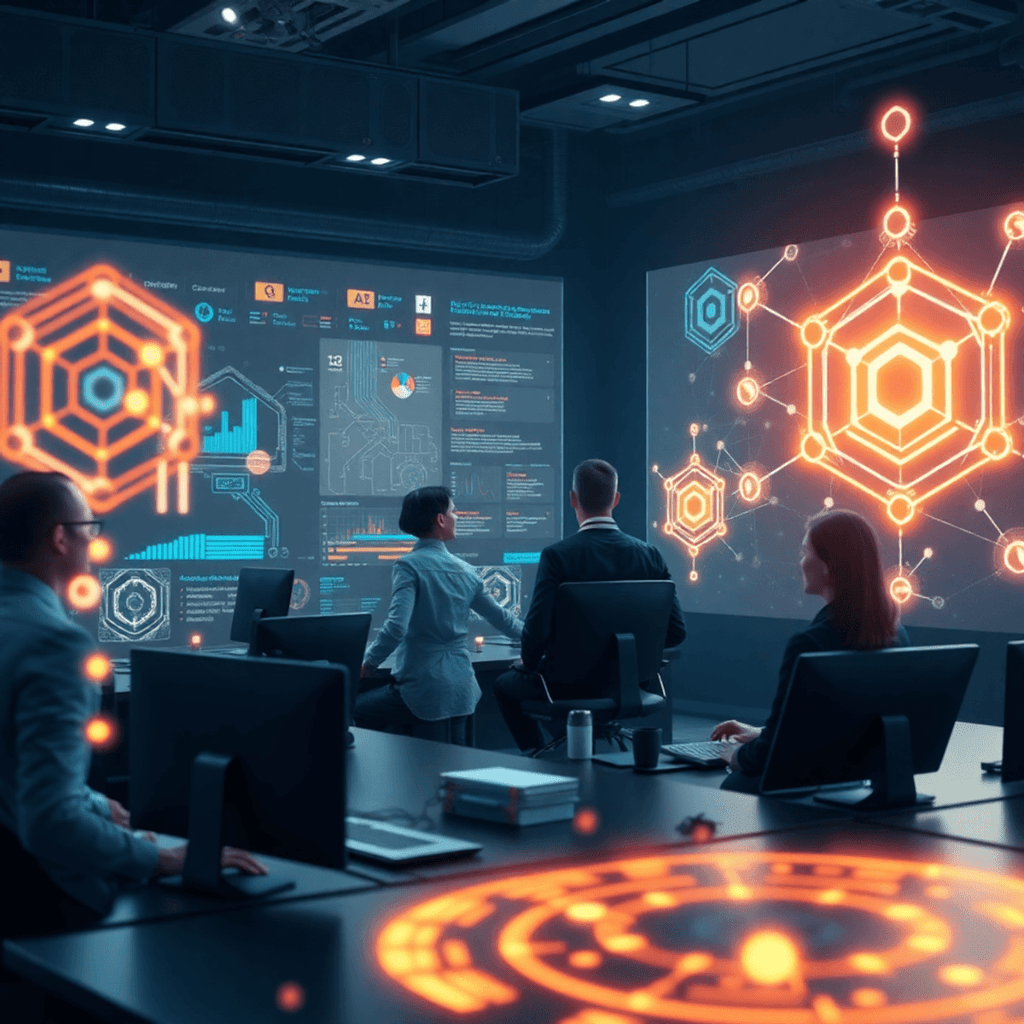
In the fast-changing world of cybersecurity, Agentic AI is a game-changer that is redefining how teams protect digital assets. Unlike traditional AI tools, agentic AI works independently with purpose-driven intelligence, allowing it to proactively address complex security issues.
Cybersecurity teams are constantly facing a wide range of threats, from advanced malware to sneaky intrusions. These challenges require not only quick action but also the ability to adapt and think strategically.
How Agentic AI Will Reshape Cybersecurity Teams explains how this technology can improve operational efficiency by automating complex tasks and continuously learning from its surroundings. This advancement benefits both human expertise and response speed against ever-changing cyber threats.
The introduction of agentic AI represents a significant turning point in AI in cybersecurity, offering the potential for smarter defenses that evolve alongside attackers instead of simply reacting to them.
Understanding Agentic AI in Cybersecurity
Agentic AI refers to autonomous, goal-directed AI systems designed to operate independently with a high level of intelligence and adaptability. Unlike traditional AI models that generate outputs based on a single prompt or task, agentic AI has the ability to pursue complex objectives over extended periods by maintaining persistent memory and learning from past interactions.
Key characteristics of agentic AI include:
- Autonomy: Functions without constant human intervention, making decisions based on evolving data and contextual understanding.
- Goal-directed behavior: Operates with clear objectives, dynamically adjusting strategies to meet predefined or emergent goals.
- Persistent memory: Retains knowledge over time, enabling continuous learning, refinement of tactics, and management of multi-step processes.
This sets agentic AI apart from simpler AI agents or generative models like basic chatbots or one-off inference engines. Traditional generative AI tends to produce responses or outputs in isolated instances without long-term context or self-driven task management. In contrast, agentic AI can orchestrate workflows across multiple tools and data sources while adapting priorities as cybersecurity threats evolve.
Within cybersecurity, these capabilities translate into systems that not only detect anomalies but can also autonomously investigate incidents, escalate risks appropriately, and coordinate defenses—all while learning from each interaction to improve future responses. This evolution toward goal-directed autonomy marks a fundamental shift in how artificial intelligence supports security operations.
Key Features of Agentic AI Transforming Cybersecurity Teams
Agentic AI introduces groundbreaking capabilities that reshape how cybersecurity teams defend digital environments. Among its most transformative features is persistent memory, allowing these systems to remember past incidents, learn from previous responses, and continuously refine their strategies. This ability supports adaptive task management, where the AI dynamically adjusts its focus based on historical context and emerging threats.
The orchestration of multiple tools and workflows empowers agentic AI to deliver near real-time threat detection and response. By seamlessly integrating diverse security solutions—such as intrusion detection systems, vulnerability scanners, and threat intelligence feeds—these agents act swiftly to contain attacks before damage escalates.
Cybersecurity architectures leveraging agentic AI may operate as a single-agent system or evolve into complex multi-agent ecosystems. Single-agent setups handle entire workflows autonomously, simplifying coordination but potentially limiting scalability. Multi-agent ecosystems distribute responsibilities across specialized agents focusing on discrete tasks like malware analysis, network monitoring, or incident response. This modular design enhances scalability and resilience by enabling parallel processing and collaborative defense strategies.
Dynamic reprioritization of tasks stands as a vital feature in fast-moving cyber environments. Agentic AI continuously reassesses the threat landscape, reallocating resources to address the most pressing risks first. This agility ensures that response efforts align tightly with evolving attack vectors and organizational priorities.
These core features—persistent memory, real-time orchestration, scalable multi-agent collaboration, and adaptive prioritization—form the backbone of agentic AI’s revolutionary impact on cybersecurity teams.
Enhancing Cybersecurity Operations Through Agentic AI
Agentic AI introduces a profound shift in automation in cybersecurity, taking over the repetitive and time-sensitive tasks that often burden human analysts. Tasks such as log analysis, initial triage of alerts, and routine vulnerability assessments are executed autonomously, freeing up skilled professionals to focus on complex investigations and strategic decision-making.
One of the most significant challenges facing Security Operations Centers (SOCs) is alert fatigue—the overwhelming flood of security notifications that can desensitize analysts and delay critical responses. Agentic AI tackles this by intelligently filtering noise, correlating disparate signals, and prioritizing genuine threats. This selective attention reduces distractions, enabling analysts to devote their expertise to incidents that truly matter.
The acceleration of decision-making processes stands out as a game-changer. Equipped with real-time contextual intelligence, agentic AI synthesizes vast amounts of data from diverse sources—network logs, threat intelligence feeds, identity management systems—and delivers actionable insights instantly. The velocity at which decisions are made increases dramatically, shortening the window between detection and response.
Imagine a SOC where alerts no longer drown analysts but instead guide them clearly toward the most pressing dangers. Where automation handles the mundane yet critical groundwork, allowing human judgment to shine on complex threat scenarios.
How Agentic AI Will Reshape Cybersecurity Teams becomes clear when operations move from reactive chaos to proactive orchestration—a landscape where human expertise and autonomous agents collaborate seamlessly to safeguard digital environments.
Collaboration Between Human Analysts and Agentic AI
The combination of human expertise and agentic AI abilities is the foundation of modern cybersecurity defense. By using human-in-the-loop frameworks, we ensure that autonomous systems don’t operate without control, but instead work with important human supervision. This integration is implemented through approval gates—where key decisions or actions by AI need analyst validation—and audit trails that carefully record all AI activities for openness and post-event review.
Continuous Improvement Through Feedback
Feedback loops between analysts and agentic AI are crucial for continuously improving system performance. When security professionals give feedback on AI-generated alerts or responses, the system learns to better differentiate between false alarms and real threats. This ongoing adjustment sharpens detection algorithms and customizes response protocols, aligning them closely with organizational priorities and changing threat landscapes.
Understanding AI Decisions with Explainable AI
Explainable AI is a critical part of this collaboration, providing context-aware insights that help analysts understand why an AI flagged a specific event or suggested a certain action. Instead of giving unclear conclusions, agentic AI explains its reasoning in simple terms, enabling analysts to make confident decisions based on their understanding. This openness also builds trust in autonomous systems, promoting smoother cooperation between human teams and their AI counterparts.
Key Elements of Collaboration
- Human oversight mechanisms: approval gates, audit trails
- Continuous refinement: feedback loops for adaptive learning
- Decision support: explainable, context-rich insights
This partnership between humans and agentic AI improves not only accuracy but also accountability within cybersecurity operations.
Security Measures for Deploying Agentic AI Safely
Agentic AI operates with significant autonomy, making robust security protocols essential to prevent misuse or compromise. Here are some critical measures that stand out:
1. Sandboxing and Privilege Separation
Agentic AI systems must run within controlled sandbox environments that isolate their activities from core infrastructure. This containment limits potential damage in case of malfunction or exploitation. Privilege separation further restricts the agent’s access rights, ensuring it operates only with the minimum permissions necessary for its tasks, reducing attack surfaces.
2. Prompt Injection Protection
Malicious actors may attempt prompt injection attacks by feeding harmful commands or data into the AI workflows to manipulate outputs or behavior. Effective mitigation involves rigorous input validation, context-aware filtering, and anomaly detection mechanisms designed specifically to recognize and block suspicious prompt alterations before they influence decision-making.
3. Auditability and Transparency
Comprehensive logging of all agent actions, decisions, and interactions is crucial for accountability. Audit trails enable security teams to reconstruct events, detect irregularities, and verify compliance with policies. Transparent reporting tools provide insights into the AI’s reasoning processes, supporting trust and facilitating human oversight.
These layered defenses create a secure foundation for agentic AI deployment in cybersecurity settings, balancing autonomous efficiency with stringent safeguards against emerging threats.
Practical Applications and Benefits in Cybersecurity Teams
Agentic AI introduces a significant change by automating routine investigations and mitigation steps, allowing cybersecurity analysts to focus on more complex, strategic challenges. Tasks such as initial alert triage, data correlation, and vulnerability scanning can be conducted autonomously, dramatically increasing operational efficiency. This routine investigation automation reduces analyst burnout and accelerates incident response times.
Integrating Diverse Data Signals
The power of agentic AI lies in its ability to integrate diverse data signals — from vulnerabilities and identity management to real-time threat intelligence feeds. By correlating these different inputs, the system generates a comprehensive view of risks facing an organization. This integrated risk assessment enables security teams to prioritize threats more accurately and allocate resources effectively.
Context-Aware Recommendations
Actionable recommendations emerge from this deep contextual understanding, closely aligned with organizational security goals. Agentic AI doesn’t just flag issues; it offers clear next steps tailored to the enterprise’s risk appetite and compliance requirements. Analysts receive insights that are not only timely but also context-aware, driving proactive defense measures rather than reactive firefighting.
Transforming Cybersecurity Workflows
The evolution of cybersecurity teams through agentic AI promises enhanced responsiveness, smarter resource utilization, and a fundamental reshaping of workflows — marking a new era where human expertise is amplified by intelligent automation for maximal impact.
Future Outlook: Transforming Cybersecurity With Agentic AI
Agentic AI brings in a new era of adaptive defense mechanisms, continuously going through cycles of detecting, deciding, acting, and learning that evolve defensive strategies in real time. This constant feedback loop allows cybersecurity systems to not only react to threats but also learn from each incident, improving strategies and predicting future attack methods with greater accuracy.
How Agentic AI Will Change SOC Operations
Collaborative workflows between agentic AI and human analysts change traditional Security Operations Center (SOC) operations. By dividing complex tasks among autonomous agents and human expertise, teams become more flexible and scalable, allowing for quicker identification and handling of advanced threats. Analysts become strategic overseers instead of overwhelmed responders, concentrating on nuanced decision-making backed by AI-driven insights.
Expected Benefits for SOC Transformation
Some expected benefits of this transformation include:
- Significant noise reduction: Filtering out false alarms and low-priority alerts that often burden analysts.
- Faster reaction times: Automated attacks can be responded to more quickly through immediate, coordinated actions by multiple AI agents working together.
- Dynamic task reprioritization: Resources can be redirected to address the most critical issues first based on changing threat landscapes.
This combination of continuous learning, modular collaboration among multiple agents, and streamlined workflows suggests that cybersecurity teams will operate with unmatched efficiency—creating a future where human and agentic AI partnerships redefine resilience against increasingly complex cyber threats.
Conclusion
Agentic AI’s impact on cybersecurity teams signals a transformative shift in defense strategies. Embracing these autonomous, adaptive systems offers a strategic advantage by enabling:
- Enhanced threat detection and rapid response through continuous learning and real-time decision-making
- Reduction of analyst workload by automating routine tasks and filtering overwhelming alert volumes
- Improved collaboration between human expertise and AI-driven insights, fostering smarter, context-aware security operations
How Agentic AI Will Reshape Cybersecurity Teams goes beyond mere automation; it redefines the human-AI partnership. Persistent memory and dynamic task management empower teams to anticipate, adapt, and counter evolving threats with unprecedented agility. Organizations positioning themselves at the forefront of this evolution will not only strengthen their defenses but also unlock new efficiencies critical for future challenges.
Embracing agentic AI is no longer optional—it is a decisive step toward resilient, intelligent cybersecurity ecosystems ready to meet tomorrow’s threats head-on.






Leave a comment